Artist

Paul McCartney

Rock / Pop · United Kingdom · 1970

high confidence

artist-side split is modeled + gross catalog revenue is separated. Why?

The primary figure is the modeled artist-side or estate-side annual cut, not gross catalog revenue.

Modeled artist-side range $3.3M-$11M/year
Gross catalog revenue $6.5M-$18M/year
Ownership context Included below
Last updated May 26, 2026
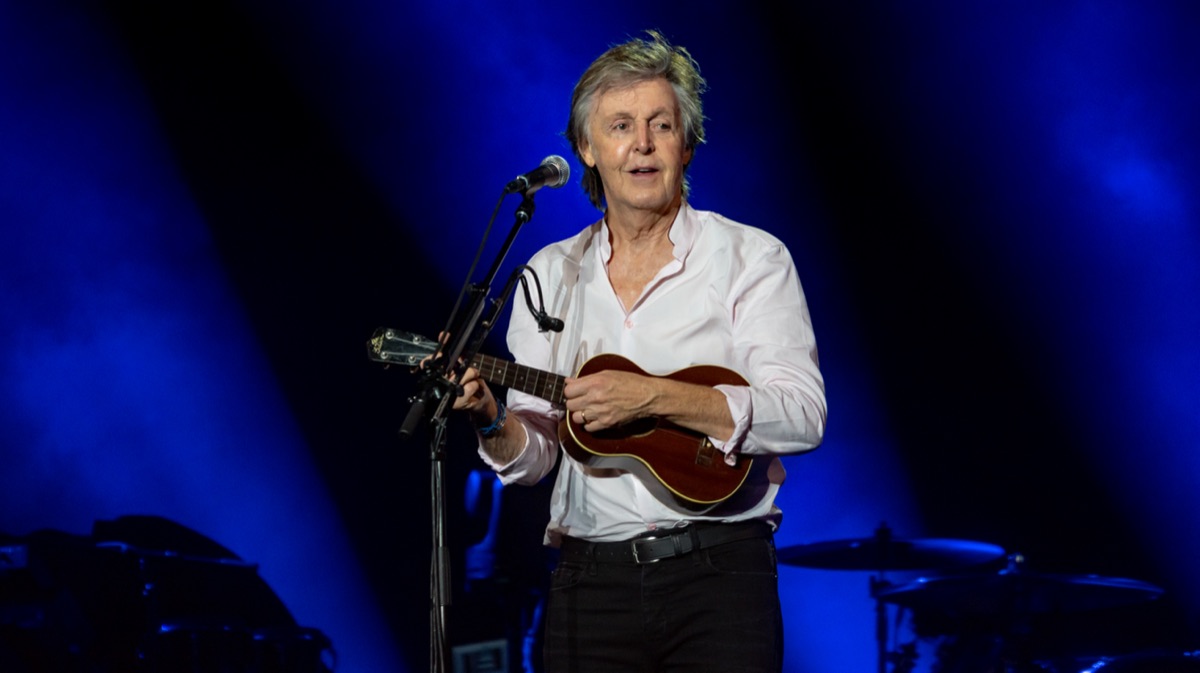
Paul McCartney performing at Austin City Limits in 2018

Paul McCartney's solo and Wings-era catalog continues to earn through streaming, classic-rock radio memory, licensing demand, and deep cross-generational recognition.

Artist image source: Wikimedia Commons

Short Answer

How much money does Paul McCartney make?

Paul McCartney is modeled at $3.3M-$11M/year per year on the artist side, with gross catalog revenue and ownership context separated below.

Takeaway: Paul McCartney works as a durable earnings page because the artist-side estimate, ownership context, and gross catalog framing can all be separated cleanly.

Yes — estimated $6M-$20M/year.

Did You Know?

  • Currently ranks around the top 26% of tracked artists by modeled artist-side earnings
  • Active since 1970 and still commercially relevant roughly 56 years later
  • 2 tracked top songs currently support this page
  • Rock / Pop remains the clearest genre lane for this catalog
  • high confidence estimate

Why This Catalog Still Works

  • catalog streaming
  • classic rock and legacy pop playlist use
  • sync licensing

Paul McCartney sits in the top 26% of tracked artists on the site by modeled artist-side earnings.

How It Compares

Paul McCartney is compared against nearby artists in the catalog based on genre, country, era, and modeled earnings range.

Artist Why compare Estimated yearly midpoint
Paul McCartney
current page
Rock / Pop · United Kingdom $7,150,000
Elton John
same country · same era
same country · same era $15,150,000
The Beatles
same genre · same country
same genre · same country $7,700,000
John Lennon
same genre · same country
same genre · same country $4,950,000

Revenue Breakdown

Gross catalog revenue $6.5M-$18M/year
100% of the lead revenue lane
Artist-side share $3.3M-$11M/year
58% of the lead revenue lane
Label share $1.2M-$3.6M/year
20% of the lead revenue lane
Publisher share $540K-$1.8M/year
18% of the lead revenue lane
Writer share $720K-$2.4M/year
18% of the lead revenue lane

Bars reflect modeled annual midpoint ranges, not audited royalty statements.

More Questions About Paul McCartney

How much does Paul McCartney make in a year?

Paul McCartney is modeled at $3.3M-$11M/year per year on the artist side, with gross catalog revenue and ownership context separated below.

Why does Paul McCartney still make money?

catalog streaming classic rock and legacy pop playlist use sync licensing

Who controls Paul McCartney's catalog?

Modeled from long-tail catalog performance and likely songwriter economics, not private royalty statements.

Sources and References

These notes and links explain the public context used to frame the page. They support a directional model, not an audited royalty statement.

Published by How Much Music using the site methodology. If a source or estimate needs correction, use the contact page.

Evidence used

  • Internal artist data separates gross catalog revenue ($6.5M-$18M/year) from modeled artist-side share ($3.3M-$11M/year).
  • Publishing and writer lanes are shown separately where available: publisher $540K-$1.8M/year; writer $720K-$2.4M/year.
  • This page is supported by 2 tracked top songs: Live and Let Die, Maybe I'm Amazed.
  • Ownership fields include master context, publishing context, catalog-sale status.
  • Catalog metadata lists genre: Rock / Pop; country: United Kingdom; active since: 1970.

Editorial context

  • Maybe I'm Amazed and Live and Let Die remain globally familiar catalog songs.
  • Strong songwriter participation can materially improve retained economics.
  • Classic-rock playlists and sync-style reuse keep the solo catalog commercially active.

Methodology limits

  • The estimate is a modeled annual range, not a public royalty statement from the artist, estate, label, publisher, or distributor.
  • Gross catalog revenue, artist-side share, label share, publisher share, and writer share are separated only where structured split data exists.
  • Top-song links and platform references are public context signals; they are not audited payout disclosures.
  • Catalog sale fields are included only where present in the local data; absence of a sale adjustment does not prove no transaction exists.
Show ownership and assumptions

Modeled from long-tail catalog performance and likely songwriter economics, not private royalty statements.

Supporting Revenue Context

Estimated gross catalog revenue$6.5M-$18M/year
Estimated artist or estate cut$3.3M-$11M/year
Estimated label share$1.2M-$3.6M/year
Estimated publisher share$540K-$1.8M/year
Estimated writer share$720K-$2.4M/year

Assumptions: Estimate assumes strong publishing participation, global legacy-streaming scale, and ongoing licensing value from the biggest solo-era recordings.

Ownership and Catalog Status

MastersMixed across legacy label agreements and catalog rights structures
PublishingSubstantial songwriter-side participation is assumed
Catalog sale statusNo full catalog sale adjustment is assumed here

Notes: Modeled from long-tail catalog performance and likely songwriter economics, not private royalty statements.

Split-aware estimate

The primary figure is the modeled artist-side or estate-side annual cut, not gross catalog revenue.

  • Gross catalog revenue is shown separately when enough context exists to distinguish top-line catalog value from artist-side take-home.
  • Ownership notes are available here and can materially change who actually keeps the revenue shown on the page.
  • All figures are conservative annual modeled ranges based on streaming scale, catalog age, licensing usefulness, and known ownership context, not audited royalty statements.

Read the full methodology.

More Context

Related Artists

Key Career Highlights

  • Known for: One of the strongest post-Beatles solo catalogs, with songs that remain useful across film, playlists, and legacy pop listening.
  • Highlight: Maybe I'm Amazed and Live and Let Die still anchor the solo catalog's long-tail economics decades after release.

Editorial Insight

Writer-led legacy catalogs often compound better because the artist participates on both the recording and publishing sides.