Artist

Pharrell Williams

Pop / R&B · United States · 1994

high confidence

artist-side split is modeled + gross catalog revenue is separated. Why?

The primary figure is the modeled artist-side or estate-side annual cut, not gross catalog revenue.

Modeled artist-side range $11M-$25M/year
Gross catalog revenue $29M-$62M/year
Ownership context Included below
Last updated May 26, 2026
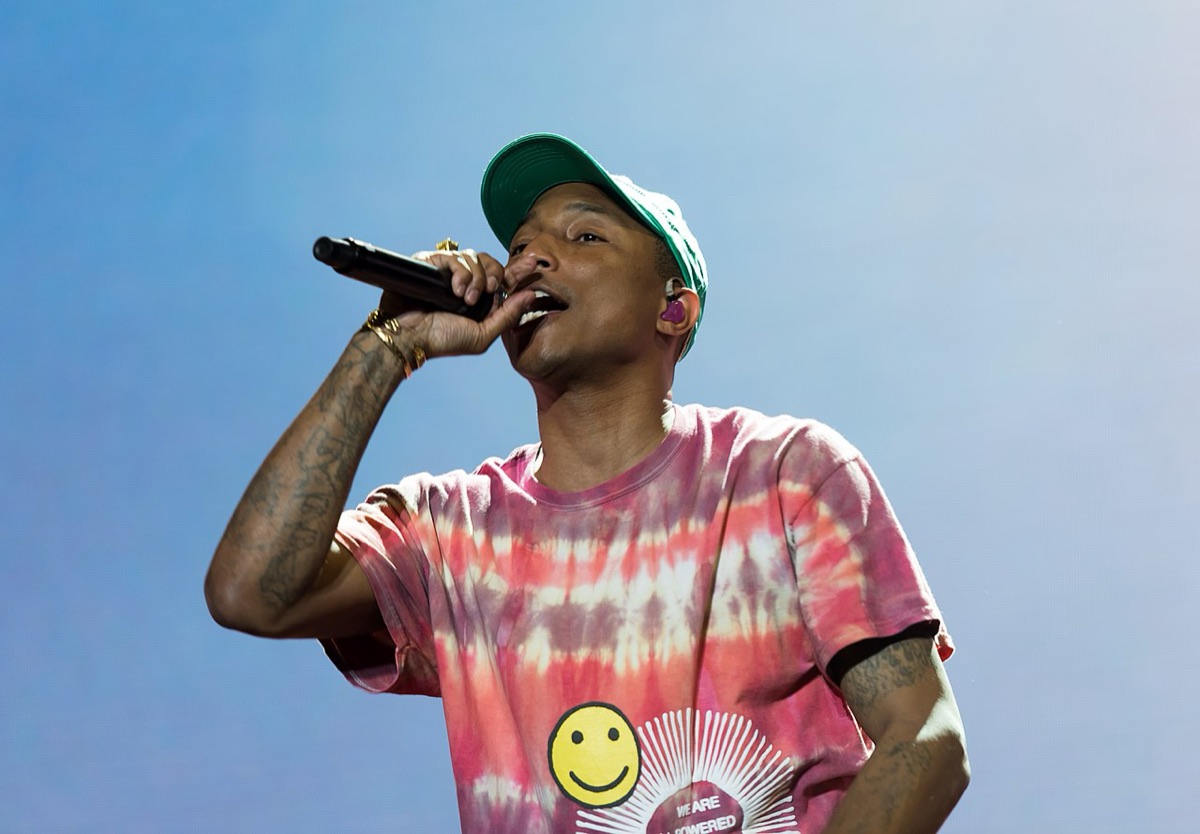
Pharrell Williams performing at Global Citizen Festival Hamburg

Pharrell Williams earns across multiple layers of the music business as a performer, songwriter, producer, and catalog stakeholder.

Artist image source: Wikimedia Commons

Short Answer

How much money does Pharrell Williams make?

Pharrell Williams is modeled at $11M-$25M/year per year on the artist side, with gross catalog revenue and ownership context separated below.

Takeaway: Pharrell Williams works as a durable earnings page because the artist-side estimate, ownership context, and gross catalog framing can all be separated cleanly.

Yes — estimated $10M-$35M/year.

Did You Know?

  • Currently ranks around the top 10% of tracked artists by modeled artist-side earnings
  • Active since 1994 and still commercially relevant roughly 32 years later
  • 2 tracked top songs currently support this page
  • Pop / R&B remains the clearest genre lane for this catalog
  • high confidence estimate

Why This Catalog Still Works

  • songwriting
  • production royalties
  • catalog streaming

Pharrell Williams sits in the top 10% of tracked artists on the site by modeled artist-side earnings.

How It Compares

Pharrell Williams is compared against nearby artists in the catalog based on genre, country, era, and modeled earnings range.

Artist Why compare Estimated yearly midpoint
Pharrell Williams
current page
Pop / R&B · United States $18,000,000
Michael Jackson
same genre · same country
same genre · same country $32,000,000
Beyonce
same genre · same country
same genre · same country $30,500,000
Mariah Carey
same genre · same country
same genre · same country $16,350,000

Revenue Breakdown

Gross catalog revenue $29M-$62M/year
100% of the lead revenue lane
Artist-side share $11M-$25M/year
40% of the lead revenue lane
Label share $6M-$17M/year
25% of the lead revenue lane
Publisher share $4.8M-$13M/year
20% of the lead revenue lane
Writer share $4.8M-$13M/year
20% of the lead revenue lane

Bars reflect modeled annual midpoint ranges, not audited royalty statements.

More Questions About Pharrell Williams

How much does Pharrell Williams make in a year?

Pharrell Williams is modeled at $11M-$25M/year per year on the artist side, with gross catalog revenue and ownership context separated below.

Why does Pharrell Williams still make money?

songwriting production royalties catalog streaming

Who controls Pharrell Williams's catalog?

Producer/songwriter economics mean artist-side value can extend beyond Pharrell-billed solo tracks.

Sources and References

These notes and links explain the public context used to frame the page. They support a directional model, not an audited royalty statement.

Published by How Much Music using the site methodology. If a source or estimate needs correction, use the contact page.

Evidence used

  • Internal artist data separates gross catalog revenue ($29M-$62M/year) from modeled artist-side share ($11M-$25M/year).
  • Publishing and writer lanes are shown separately where available: publisher $4.8M-$13M/year; writer $4.8M-$13M/year.
  • This page is supported by 2 tracked top songs: Frontin', Happy.
  • Ownership fields include master context, publishing context, catalog-sale status.
  • Catalog metadata lists genre: Pop / R&B; country: United States; active since: 1994.

Editorial context

  • Happy remains one of the most reusable global pop songs of the 2010s.
  • Producer and songwriter participation creates more durable economics than performer-only catalogs.
  • Cross-catalog visibility from solo, featured, and production work strengthens annual earnings.

Methodology limits

  • The estimate is a modeled annual range, not a public royalty statement from the artist, estate, label, publisher, or distributor.
  • Gross catalog revenue, artist-side share, label share, publisher share, and writer share are separated only where structured split data exists.
  • Top-song links and platform references are public context signals; they are not audited payout disclosures.
  • Catalog sale fields are included only where present in the local data; absence of a sale adjustment does not prove no transaction exists.
Show ownership and assumptions

Producer/songwriter economics mean artist-side value can extend beyond Pharrell-billed solo tracks.

Supporting Revenue Context

Estimated gross catalog revenue$29M-$62M/year
Estimated artist or estate cut$11M-$25M/year
Estimated label share$6M-$17M/year
Estimated publisher share$4.8M-$13M/year
Estimated writer share$4.8M-$13M/year

Assumptions: Modeled from performer income, producer/songwriter catalog depth, publishing participation, and durable sync-friendly pop records.

Ownership and Catalog Status

MastersMixed performer, producer, and label-side master economics across projects
PublishingPublishing and producer-side participation appear especially important to retained value
Catalog sale statusNo broad catalog sale adjustment is assumed

Notes: Producer/songwriter economics mean artist-side value can extend beyond Pharrell-billed solo tracks.

Split-aware estimate

The primary figure is the modeled artist-side or estate-side annual cut, not gross catalog revenue.

  • Gross catalog revenue is shown separately when enough context exists to distinguish top-line catalog value from artist-side take-home.
  • Ownership notes are available here and can materially change who actually keeps the revenue shown on the page.
  • All figures are conservative annual modeled ranges based on streaming scale, catalog age, licensing usefulness, and known ownership context, not audited royalty statements.

Read the full methodology.

More Context

Related Artists

Key Career Highlights

  • Known for: Crossover hitmaking, production work, and songwriting-driven economics.
  • Highlight: A mix of solo hits and deep producer-writer participation gives his catalog more resilient economics than performer-only pop catalogs.

Editorial Insight

Producer-writers can monetize the same catalog from more than one side of the rights stack.