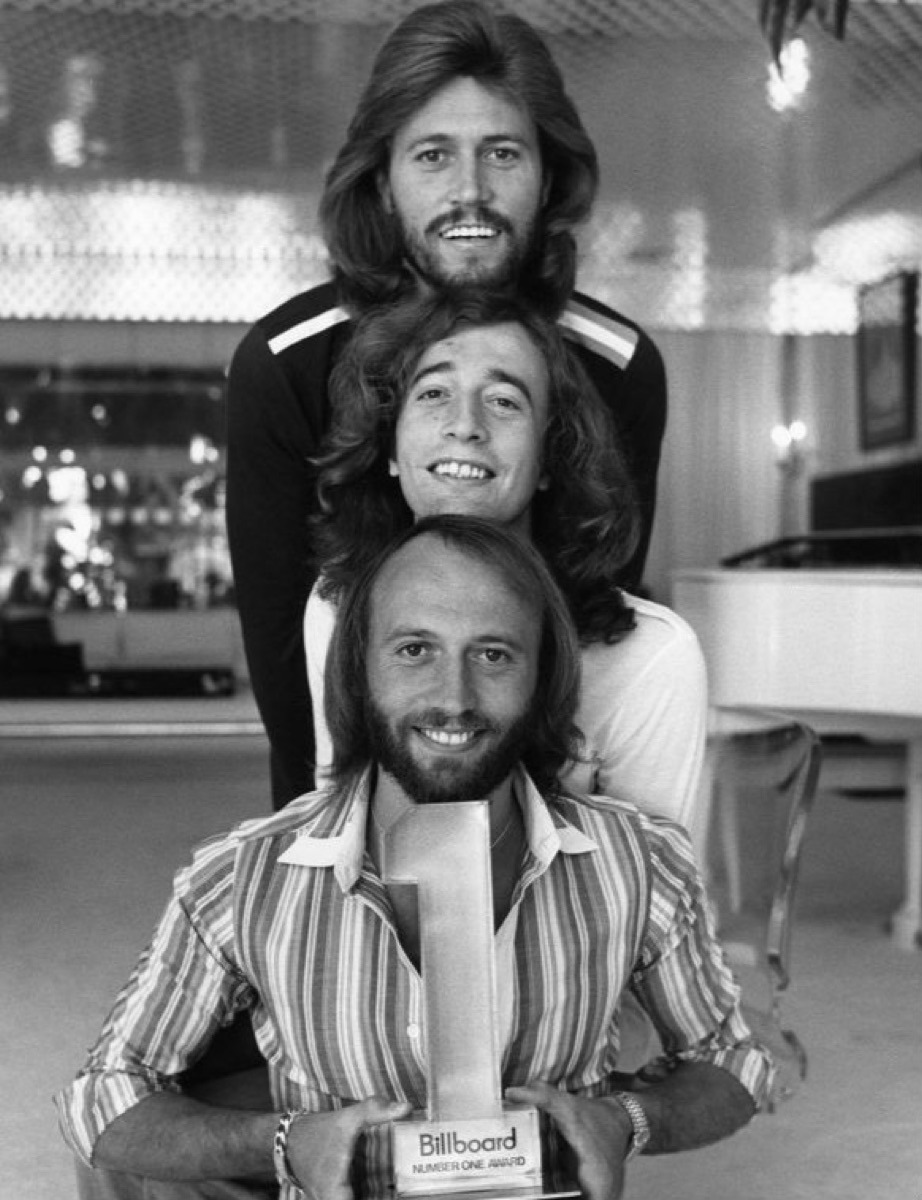
Artist
Bee Gees
Pop / Disco · United Kingdom · 1963
high confidence
artist-side split is modeled + gross catalog revenue is separated. Why?
The primary figure is the modeled artist-side or estate-side annual cut, not gross catalog revenue.
The Bee Gees still monetize at a high level because the Saturday Night Fever-era catalog remains globally recognizable and unusually reusable in film, TV, and playlist culture.
Artist image source: Wikimedia Commons
Short Answer
How much money does Bee Gees make?
Bee Gees is modeled at $3.3M-$9.9M/year per year on the artist side, with gross catalog revenue and ownership context separated below.
Takeaway: Bee Gees works as a durable earnings page because the artist-side estimate, ownership context, and gross catalog framing can all be separated cleanly.
Bee Gees is modeled at $3.3M-$9.9M/year per year on the artist side, with catalog, label, publishing, and writer economics separated where possible.
Did You Know?
- Currently ranks around the top 29% of tracked artists by modeled artist-side earnings
- Active since 1963 and still commercially relevant roughly 63 years later
- 2 tracked top songs currently support this page
- Pop / Disco remains the clearest genre lane for this catalog
- high confidence estimate
Why This Catalog Still Works
- catalog streaming
- soundtrack-era nostalgia
- publishing royalties
Bee Gees sits in the top 29% of tracked artists on the site by modeled artist-side earnings.
How It Compares
Bee Gees is compared against nearby artists in the catalog based on genre, country, era, and modeled earnings range.
Revenue Breakdown
Bars reflect modeled annual midpoint ranges, not audited royalty statements.
More Questions About Bee Gees
How much does Bee Gees make in a year?
Bee Gees is modeled at $3.3M-$9.9M/year per year on the artist side, with gross catalog revenue and ownership context separated below.
Why does Bee Gees still make money?
catalog streaming soundtrack-era nostalgia publishing royalties
Who controls Bee Gees's catalog?
Bee Gees's page should be read as modeled artist-side annual income, not a public royalty statement. Ownership and label terms can materially change take-home economics.
Sources and References
These notes and links explain the public context used to frame the page. They support a directional model, not an audited royalty statement.
Published by How Much Music using the site methodology. If a source or estimate needs correction, use the contact page.
Evidence used
Editorial context
Methodology limits
How Deep Is Your Love: Amazon Music reference
Used as an additional public catalog lookup reference.
Stayin' Alive: Amazon Music reference
Used as an additional public catalog lookup reference.
Show ownership and assumptions
Bee Gees's page should be read as modeled artist-side annual income, not a public royalty statement. Ownership and label terms can materially change take-home economics.
Supporting Revenue Context
Assumptions: Estimate keeps Bee Gees's current headline range as the artist-side figure and models gross catalog, label, publishing, and writer lanes from that conservative annual range.
Ownership and Catalog Status
Notes: Bee Gees's page should be read as modeled artist-side annual income, not a public royalty statement. Ownership and label terms can materially change take-home economics.
Split-aware estimate
The primary figure is the modeled artist-side or estate-side annual cut, not gross catalog revenue.
More Context
Related Artists
Key Career Highlights
Editorial Insight
Bee Gees's page is strongest when read as a split-aware catalog model: the useful number is not just gross demand, but how much of that demand can plausibly reach the artist side.